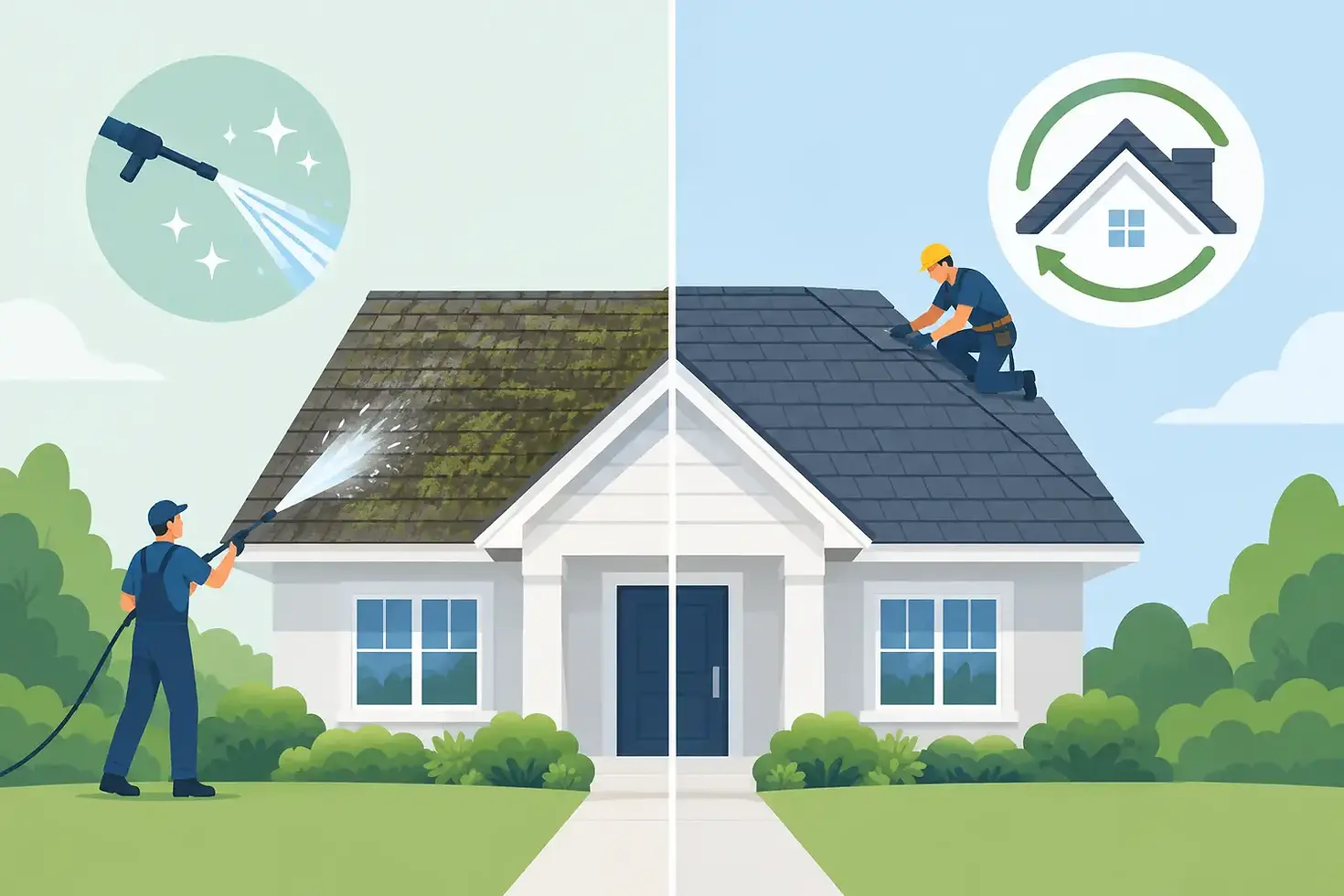
Roof Cleaning Versus Replacement for Your Home

A roof can look worn out long before it has reached the end of its service life. Dark streaks, moss, leaf buildup, and dingy shingles often make homeowners consider a costly replacement too soon. The right choice in roof cleaning versus replacement depends on what is sitting on the roof, what condition the materials are in underneath it, and whether the roof is still keeping water where it belongs.
Cleaning can restore a roof’s appearance and remove moisture-holding growth that threatens its long-term performance. It cannot repair missing shingles, failing flashing, active leaks, or an aging roof system. A careful evaluation helps separate a maintenance issue from a roofing issue before you invest in either service.
When Roof Cleaning Is the Better Investment
Roof cleaning is often appropriate when the roof is structurally sound but covered in organic growth or environmental buildup. Black streaks are commonly caused by algae. Green patches may be moss or lichen, while piles of leaves and pine needles can hold moisture against shingles and collect in valleys near flashing.
These conditions affect more than curb appeal. Persistent buildup can keep roof surfaces damp longer after rain, interfere with normal drainage, and make small areas of deterioration harder to spot. On a customer-facing commercial property, a stained roof can also undermine an otherwise well-maintained exterior.
A professional cleaning is most valuable when the shingles, tiles, or metal panels remain intact and the roof is not showing evidence of water intrusion. The goal is not simply to make the roof look brighter. It is to remove damaging buildup with a method suited to the material, protecting the surface while restoring a cleaner, more accurate view of its condition.
Signs Your Roof May Need Cleaning
A cleaning assessment makes sense if you see dark streaking that appears to sit on the shingle surface, moss near shaded edges, debris gathered in valleys, or organic matter collecting around roof penetrations. You may also notice algae spreading on north-facing slopes, where direct sunlight is limited.
Cleaning is especially worthwhile after a long season of falling leaves, storms, or heavy pollen. Debris does not stay isolated to the roof. It can move into gutters and downspouts, slowing water flow and increasing the chance of overflow near siding, foundations, and entryways.
The timing matters. Removing moss before it becomes thick and established is far easier on both the roof and the budget than waiting until it has spread across multiple slopes.
Why the Cleaning Method Matters
Not every dirty roof should be pressure washed. High pressure can dislodge protective granules from asphalt shingles, force water where it does not belong, damage aged materials, and create a result that looks clean at the cost of shortened roof life.
A professional roof cleaning process should begin with the roof type, condition, pitch, and contamination level. Soft washing is often the appropriate method for asphalt shingles and other sensitive surfaces because it treats organic growth without relying on aggressive force. The application, dwell time, rinse approach, and surrounding landscape protection all require attention.
That detail is where high-fidelity cleaning earns its value. A crew should protect plants, control runoff, clear loose debris thoughtfully, and avoid walking areas that do not need to be walked. The standard is not a quick visual improvement from the street. It is a cleaner roof achieved without compromising the material it is meant to preserve.
When Replacement Should Move to the Front of the Conversation
Cleaning should never be used to disguise a roof that is failing. If the roof has reached the end of its expected lifespan or has material damage that allows water beneath the surface, replacement may be the safer and more cost-effective decision.
Look beyond discoloration. Curling, cracked, loose, or missing shingles are roofing concerns, not cleaning concerns. Exposed fiberglass mat, widespread granule loss, soft or sagging roof decking, damaged flashing, and repeated interior water stains also call for a qualified roofing inspection.
A roof can also fail from the inside out. If attic insulation is damp, daylight is visible through the roof deck, or a musty odor appears after rain, do not schedule cleaning as a first response. Identify and correct the source of moisture first. Cleaning a compromised roof may improve its appearance, but it does nothing to stop a leak.
Warning Signs That Need a Roofing Professional
Some symptoms warrant a roofer’s evaluation before any exterior cleaning work begins. These include active leaks, ceiling stains, granules accumulating heavily in gutters, shingle edges lifting in the wind, damaged vents or pipe boots, and flashing that has pulled away from chimneys or walls.
Storm damage changes the equation as well. After hail, falling branches, or high winds, a roof may have fractures or punctures that are difficult to recognize from the ground. A professional roof inspection can document the condition and determine whether repair or replacement is needed before cleaning is considered.
Roof Cleaning Versus Replacement: The Cost Question
Replacement is a major capital investment, so it is reasonable to ask whether cleaning can extend the useful life of an existing roof. In many cases, it can support a sound roof by removing algae, moss, and debris that retain moisture and obscure developing issues. It also restores curb appeal without the expense and disruption of a full reroof.
Still, cleaning is maintenance, not a reset button. An older roof with brittle shingles, depleted granules, or recurring leaks will not become younger because the staining is gone. Spending money on a careful cleaning may not make sense when replacement is imminent.
The practical question is not which service costs less today. It is which service addresses the roof’s actual condition without creating a larger expense later. For a healthy roof, cleaning is preventive care. For a failed roof, replacement protects the building from more serious water and structural damage.
A Better Way to Make the Decision
Start with a visual review from the ground and from accessible areas, not by climbing onto the roof yourself. Note where stains, growth, debris, damaged shingles, or drainage problems appear. Check interior ceilings and attic spaces for evidence of moisture, and look at gutters for unusually heavy shingle granules.
If the roof appears intact but dirty, request a professional cleaning assessment. A reputable exterior-cleaning provider should explain the method recommended for your roof material and tell you when a condition falls outside the scope of cleaning. Clear communication is part of protecting the property.
If there are signs of leaks or material failure, schedule a qualified roofer first. Once repairs or replacement are complete, regular roof and gutter maintenance can help keep the new system clear, visible, and better prepared to shed water as designed.
Protect the Roof, Not Just Its Appearance
A clean roof should make a property look cared for, but the best result is functional as well as visible. Removing buildup supports drainage, reduces moisture exposure, and helps reveal the true state of the roof beneath it. Just as importantly, knowing when not to clean prevents cosmetic work from delaying a necessary repair.
Give your roof the same standard of care you expect from the rest of your exterior: assess the material honestly, choose the least aggressive effective method, and address small concerns before they become costly surprises.


Comments